.svg)
%20--%3e%3csvg%20version='1.1'%20id='Layer_1'%20xmlns='http://www.w3.org/2000/svg'%20xmlns:xlink='http://www.w3.org/1999/xlink'%20x='0px'%20y='0px'%20viewBox='0%200%20512%20512'%20style='enable-background:new%200%200%20512%20512;'%20xml:space='preserve'%3e%3cpath%20style='fill:%23FBBB00;'%20d='M113.47,309.408L95.648,375.94l-65.139,1.378C11.042,341.211,0,299.9,0,256%20c0-42.451,10.324-82.483,28.624-117.732h0.014l57.992,10.632l25.404,57.644c-5.317,15.501-8.215,32.141-8.215,49.456%20C103.821,274.792,107.225,292.797,113.47,309.408z'/%3e%3cpath%20style='fill:%23518EF8;'%20d='M507.527,208.176C510.467,223.662,512,239.655,512,256c0,18.328-1.927,36.206-5.598,53.451%20c-12.462,58.683-45.025,109.925-90.134,146.187l-0.014-0.014l-73.044-3.727l-10.338-64.535%20c29.932-17.554,53.324-45.025,65.646-77.911h-136.89V208.176h138.887L507.527,208.176L507.527,208.176z'/%3e%3cpath%20style='fill:%2328B446;'%20d='M416.253,455.624l0.014,0.014C372.396,490.901,316.666,512,256,512%20c-97.491,0-182.252-54.491-225.491-134.681l82.961-67.91c21.619,57.698,77.278,98.771,142.53,98.771%20c28.047,0,54.323-7.582,76.87-20.818L416.253,455.624z'/%3e%3cpath%20style='fill:%23F14336;'%20d='M419.404,58.936l-82.933,67.896c-23.335-14.586-50.919-23.012-80.471-23.012%20c-66.729,0-123.429,42.957-143.965,102.724l-83.397-68.276h-0.014C71.23,56.123,157.06,0,256,0%20C318.115,0,375.068,22.126,419.404,58.936z'/%3e%3cg%3e%3c/g%3e%3cg%3e%3c/g%3e%3cg%3e%3c/g%3e%3cg%3e%3c/g%3e%3cg%3e%3c/g%3e%3cg%3e%3c/g%3e%3cg%3e%3c/g%3e%3cg%3e%3c/g%3e%3cg%3e%3c/g%3e%3cg%3e%3c/g%3e%3cg%3e%3c/g%3e%3cg%3e%3c/g%3e%3cg%3e%3c/g%3e%3cg%3e%3c/g%3e%3cg%3e%3c/g%3e%3c/svg%3e)





 Low Noise Fireworks
Mirage
25 Shot | 30 Sec | 8m SafetyQuiet Fireworks Magic£29.99£19.99

10 reviews
 Sort

The backbone of any quiet display: multi-shot aerial fireworks that swap explosive reports for soft thuds and visual effects.
Standard cakes use a large burst charge to explode effects wide into the sky, and that explosion is what makes them loud. Low noise cakes use a smaller charge that gently unfolds stars, comets and glittering effects instead. You get all the aerial colour and spectacle, with the sound dramatically reduced.
You will still hear a soft thump as each shot launches from the tube - every aerial firework needs a lift charge. But it's a dull, low sound that doesn't travel far, rather than the sharp crack of a standard firework that carries across a whole neighbourhood. That makes low noise cakes the most versatile product in any quiet range.
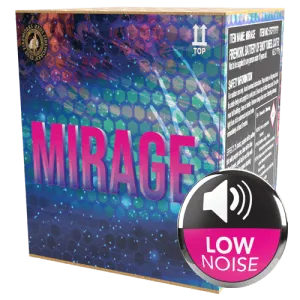
£29.99£19.99

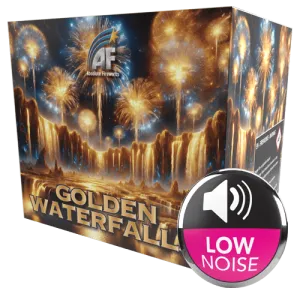
£24.99£19.99
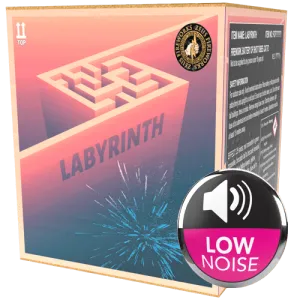
£39.99£29.99
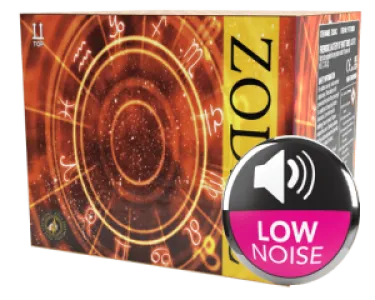
£48.99£34.99
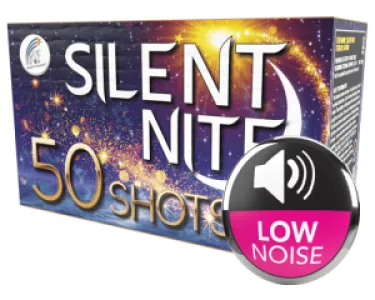
£54.99£39.99
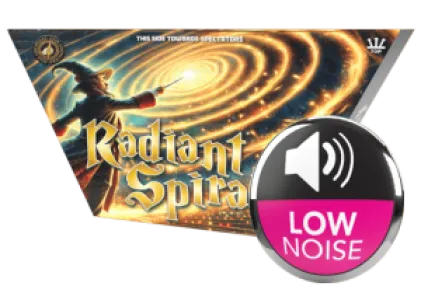
£95.99£59.99

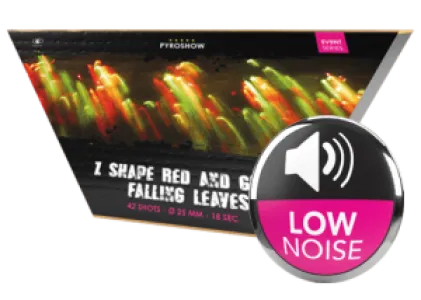
£102.99£69.99
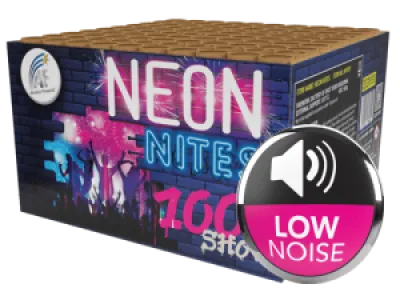
£109.99£79.99
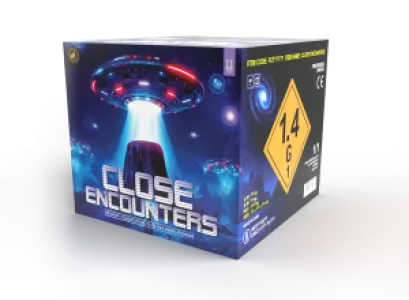
£129.99£99.99
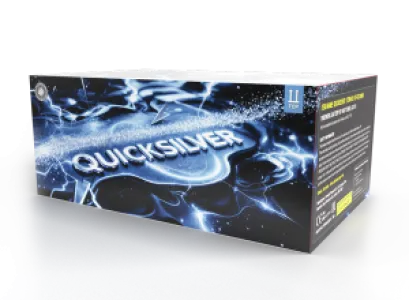
£164.99£119.99
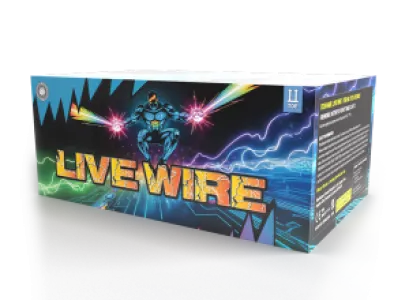
£164.99£119.99
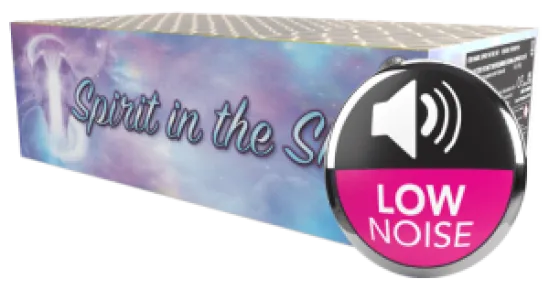
£219.99£139.99
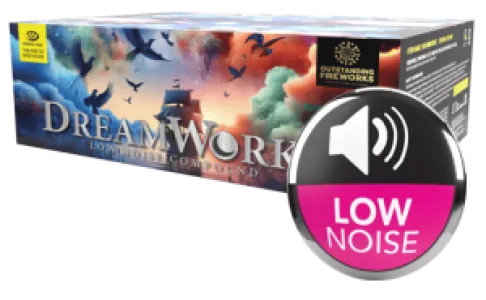
£339.99£229.99
In a quiet display, use rockets selectively. Rather than firing them in bursts, use one or two as punctuation between quieter fireworks - a moment of height and movement without dominating the sound level.
Build the bulk of your display around low noise cakes, candles and fountains, then add a rocket or two as accent pieces. You get height and variety, and the noise stays considerate for neighbours and pets.
 Low noise rocket safety
Low noise rockets carry identical safety requirements to standard rockets. Always use a proper rocket launcher or stick the launch stake firmly into the ground so the rocket is stable and pointing directly skyward before lighting. Check there is nothing overhead - trees, cables, buildings - within the flight path. Light the fuse at arm's length using a firework lighter or portfire and retire immediately to a safe distance.
Most low noise rockets are Category F2 and require a minimum of 8 metres between the launch point and spectators, though some may require more - always check the product label. Be aware that rocket sticks and spent casings fall back to earth after firing and can land some distance away, so ensure your fallout zone is clear of people before lighting.
For full guidance before you buy or fire, please read our Fireworks Safety Guide
Can't find the answer you're looking for? Contact our team - we're always happy to help.
Quieter than standard rockets, yes - but rockets are the noisiest product in any low noise range. The motor that propels the rocket skyward will always produce a whoosh on launch, as that is simply how rockets work. What low noise rockets remove is the sharp aerial bang at the top, replacing it with softer colour effects and crackling that produce significantly less noise. They are the best option for adding height to a quiet display, but if near-silence is your priority, low noise cakes and fountains are the quieter choice.
Because the motor that lifts a rocket into the air inherently produces noise - it is a small propulsion charge that generates both thrust and sound as it burns. That whoosh on launch cannot be eliminated without changing the fundamental way a rocket works. The aerial break at the top can be reformulated to produce softer, quieter effects, and that is what low noise rockets do, but the launch itself remains the most audible part of any rocket.
They are a good option if height matters to you, used selectively rather than in large numbers. Build the bulk of your display around low noise cakes, Roman candles and fountains, then use one or two low noise rockets as accent pieces to add height and movement. This keeps the overall noise level low while giving your display a fuller, more varied feel. If noise reduction is the overriding priority, leave rockets out entirely.
Better than standard rockets, but rockets remain the noisiest product in any low noise display. The launch whoosh is audible regardless of the rocket type. If you have pets nearby or neighbours with animals, consider whether rockets are necessary at all for your display, or use just one or two at most. Pets should always be kept indoors during any firework display with background music or TV to help mask residual sounds.
Always keep pets indoors during any firework display.
Low noise rockets replace the explosive aerial break of a standard rocket with softer visual effects at the top, such as colour spreads, glittering star bursts, crackling chrysanthemums and gentle peony effects. The visual impact in the sky is comparable to a standard rocket, just with the sharp crack removed. Check the product video on each listing to see exactly what to expect before you buy.
Our minimum order for home delivery is £99 including VAT.
There is no minimum for click and collect from our retail outlets. Large orders can sometimes qualify for free delivery, please check our delivery information for more details.
Our team will give you an honest answer based on your space, your neighbours and what you want to achieve. Whether rockets belong in your display or not, we'll help you plan the right show, for free.
Low noise rockets work best as accent pieces in a display built around quieter fireworks. Browse the rest of our low noise range to find the cakes, candles and fountains that will form the backbone of your quiet show.